As 2016 drew to a close, I had to work between Christmas and the New Year but in between I managed a few hours and a couple of days walking.
The days I had off were mainly bright and crisp. I don't mind the cold, in fact when I'm wrapped up in my thermals I revel in it. Winter also brings a totally different dynamic, whether visual or psychological. In the Natural world it also brings diversity on a completely different scale. Bird species that breed in the north spend their winter here and in numbers too.
Today was Boxing day and after lunch with my family I ventured out to the Haven for the last couple of hours before sunset.
In the harbour, families were out and about and some were feeding the gulls by the bridge. Their silhouettes looked great as the sun began to sink.
Looking back into the reserve from the bridge I could see three Marsh Harriers settling in to roost.
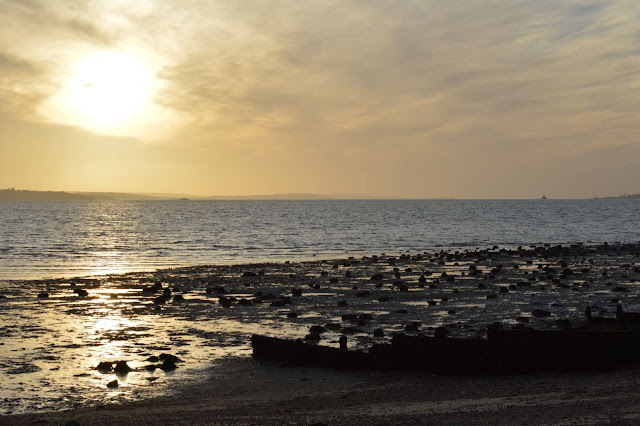
I walked back along the harbour wall, the tide was receding so I sat and watched the sun as it followed suit. The light at this time of year is different also. A winter sunset is something I admire very much.
The Red funnel ferry was heading from Southampton to Cowes as the sun gradually set.
People were still busy walking around with their dogs and children as I sat and it was then I noticed the Snow Bunting that had been here now for several weeks. It hopped and fed and little by little came closer to me until it was only two feet away. They are known for their confiding nature. No one else noticed this tiny camouflaged character. I was transfixed by this creature as it went about it's business in survival, eating invisible seeds as it went.
I've always wondered where it roosts at night and the journey it will have to make alone to it's breeding grounds in the arctic.
I bid it goodnight and retreated to my home ready for an early start the next day.
I had a full day to spend on the 27th so I decided to start at a favourite spot in the New Forest, Black Gutter Bottom.
Having been unsuccessful on the last two occasions trying to see Hen Harriers here I thought it might be third time lucky...?
I arrived just after sunrise and with my friend Chris with family at Christmas, I had the day to myself this time. The New Forest ponies were having breakfast in amongst the frozen heather and they would paw the ground to reveal unfrozen morsels beneath. It was just below freezing and the frost gave the impression of snow all around. The was little wind too, which helped with sound travel.
Reed Buntings are prevalent here in winter which is strange seeing as their breeding habitat and name derive a completely different habitat.
I was the first human to walk the path here this morning. It scrunched below me as I continued to the valley floor.
I walked down Deadman Hill and up the opposite side to Leaden Hall. Across the opposite side is Ashley Hole which is a valley frequented by Hen Harriers but not at this time it seemed.
Several Fallow Deer were about however. This Buck was guarding his hareem of Does and soon fled on sight of my presence.
My previous visit here with Chris we played 'chase me' with the Dartford Warblers. Today they played 'Photograph me' which was nice!..
Having little luck with the Harriers so far, I decided on a different tack and headed back into Black Gutter Bottom and walked the valley. My instinct was if one was about, I would be closer to it and it would possibly fly past me for a good photo opportunity as it hunted. My first encounter was another Fallow Deer.
Even though the sun was rising, the temperature was still low and the frost refused to thaw, which helped me under foot. Being in the valley it would normally be quite boggy but the hard ground helped me traverse the area better.
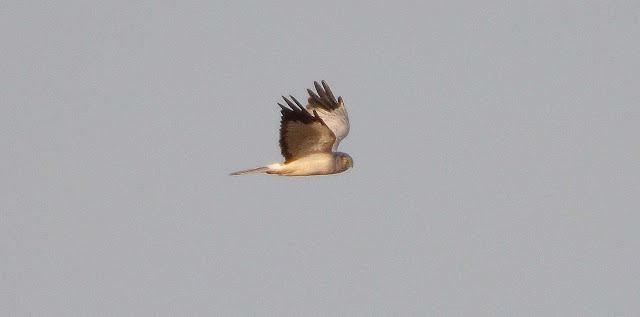
Then my hopes bore fruit. I spied a bird of prey on the horizon and knew immediately it was a Harrier and a beautiful male too. 'Please please fly this way' I muttered as I raised my camera in hope.
It obliged. My heart rate rose, adrenaline coursed my veins. It was still freezing outside but from within I was on fire!
Such a persecuted bird of prey, on the brink of extinction in this country and I had the incredible luck to be in the company of such a rare and beautiful animal.
It hunted for several minutes before me as I trudged back and forth trying to capture it's majesty before it's inevitable departure. It went to ground a few times only to spring up and confuse me again.
..and then it was gone for good. I stood and waited as I poured some green tea from my flask in the vain hope of it's return but to no avail. Oh, but what a privilege to be in the company, if only for a few moments, of one of the most ethereal birds to visit here. It was only 11am, I could easily have gone home now and seen it as one of the best days of the year.
The path up from Black Gutter Bottom is fairly steep but the grin on my face and the joy in my heart lifted me like the wings of the fieldfare here to my van with ease. What a morning! Could the afternoon be nearly as good?
My next destination was just around the corner. Eyeworth Pond is a man made large lake backed by mainly birch, beech and oak woods of the New Forest.
Most winters there are reports of Goosanders here. Part of the sawbill family of ducks. They are freshwater birds and breed in rivers in the summer. They are normally quite gregarious but today only one male swam here.
The light was excellent but the light against dark is hard to gauge when photographing this sleek diving duck.
The shadows and reflections on the water gave different colours and shapes.
A resident species here is the Mandarin Duck. A native of China and Japan they were introduced here in the mid 18th century but didn't escape into the wild until the 1930's from Cobham in Surrey.
I first encountered these at Virginia Water Lake along with another introduced species, the Ring Necked Parakeet.
Mandarin now number around 8000 in Britain.
The female is, as in most cases, the least impressive in plumage.
It was time to move on. After lunch, I headed towards Calshot. The westerly tip of Southampton Water. Just before Calshot is Badminton gravel pits. Nature is gradually reclaiming the area after much excavation.
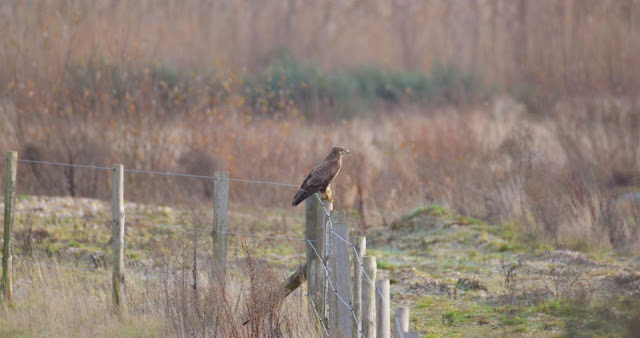
I parked nearby and walked the footpath to the ponds. As I turned the corner, I spied a Buzzard on a post. I managed a few shots before it spotted me.
One thing I am learning is the turning of a corner whilst out walking. Time and again I walk blindly without thinking there may be something there. This time I had a rare piece of forethought. Just a common Buzzard this time but who knows the next?
The footpath traverses the current and redundant pits. Meadow Pipits were plenty here.
A gap in the gravel wall gave the impressive view of the now disused Fawley power station.
This was an oil fired facility which dominates the horizon along the Solent. Many years holidaying along the coast here as a child in the 70's had this enormous edifice as a backdrop.
Along by the water I heard some overwintering Chiffchaffs. I have learnt how to imitate their 'Huitt' call, of which they usually respond and fly over to check me out. They didn't fail me this time....
I carried on my circular walk. All around are lines of pylons. Being in an area of overwintering wildfowl it is usual to find Peregrines sat on top of one. In fact they are almost the dominant raptors here. I see more here than the once common Kestrel and occasionally more than the Buzzard.
It didn't take me long to find one and then another on the next pylon along.
The backdrop of Fawley oil refinery is always a slightly disturbing juxtaposition on the skyline but it's produce did allow me to travel there that day.
The last day of the year I always leave as a day off for the last walk.
I left home and looked towards my destination for the day.
Calshot on the opposite tip of Southampton Water is around 5 miles away as the crow flies. Being just a humble human being I had to go the long way round which is more like 30 miles.
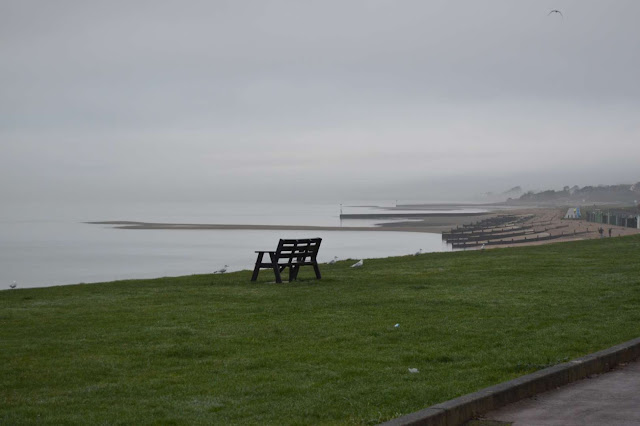
It was shrouded in mist which wasn't a good start.
Before Calshot I dropped into Hythe Nature Reserve to see if it was even possible to see.
The container ships slipped into port and their fog horns boomed around the Solent like singing Humpback whales.
Only close in shorebirds like this oystercatcher were visible. I decided to carry on to Calshot.
Miraculously the fog began to lift as I approached Calshot and within minutes I was bathed in golden light.
The bay within Calshot itself lit up the wildfowl and waders beautifully.
Here the Brent Geese
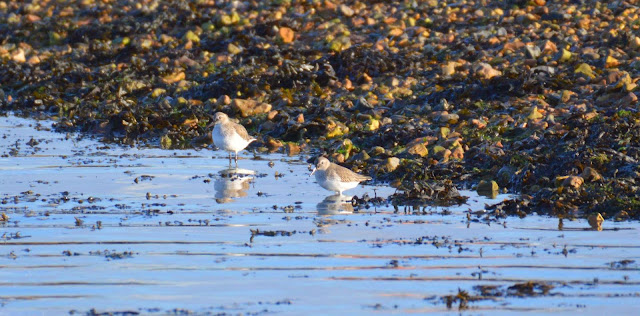
Dunlin fed on the shore until disturbed by dog walkers
Out on the marshes as the tide fell there were a few Black Tailed Godwits, and many more Brent.
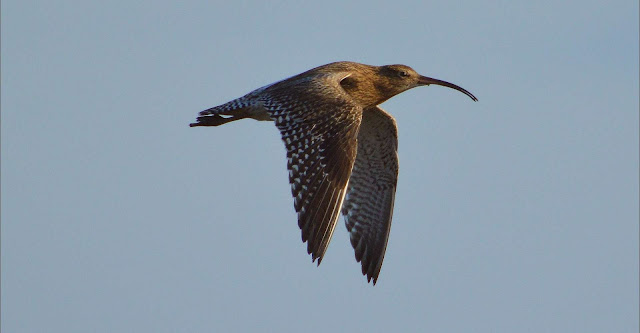
The marshes are an excellent feeding ground and Curlew were prevalent here. As I passed by they would fly up calling in alarm.
or just hide with convincing camouflage.
Many duck species spend the winter here. Teal are numerous.
The backdrop of the disused power station dominates to skyline.
Redshank are probably the most common of the waders you can encounter along the coast here.
The Pintail, probably the most elegant of ducks and definitely one of my favourites.
A Wigeon decided to photo bomb the shot. Another elegant duck but the Pintail has it for me.
As is predictable along the coast, the mist rolled back in as though a shroud had been thrown over the shore.
Looking at the power station I had hoped to see a Black Redstart as is seen occasionally here. Not on this occasion but through the mist I discerned the shape of another Peregrine sat atop of the building...
Must be some panoramic views up there when the weather is clear.
It was nearing lunchtime so I decided to head back to the van at Calshot.
From there I drove to Ashlett Creek some 3 miles distant to sit and have lunch prior to walking back towards Calshot from the opposite direction, to see the other half of the coastal footpath.
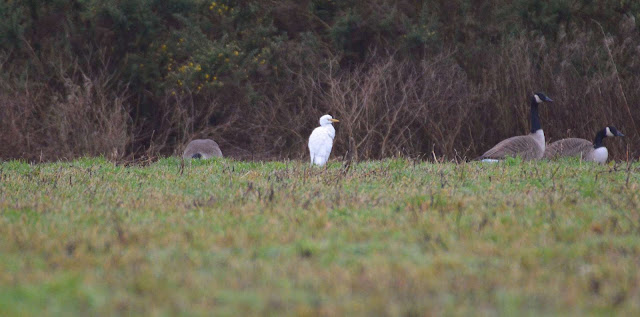
A Little Egret showed me the way back.
At Ashlett Creek there is a quaint pub and a picturesque tidemill.
A Little Grebe fed in the harbour as I started on my way
At last I spied a Kestrel.
The marshes here are ideal habitat for waders and ducks.
The views across Southampton Water are always busy with all sorts of craft. The Red Funnel ferries and fast cats are a constant up and down the narrow straights.
The path hugs the shoreline and in amongst the grasses of the marsh the Wigeon could be seen feeding.
As well as the Shelduck further out on the pools
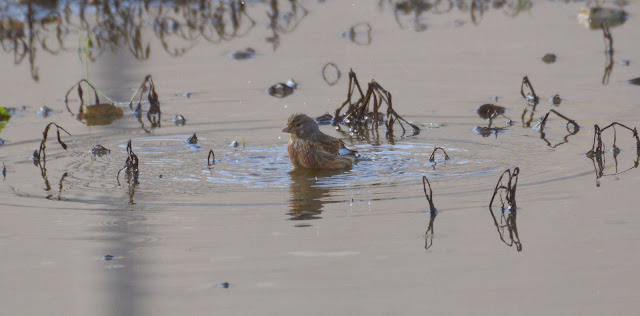
As I reached the power station once more, through the barbed wire fence a large flock of Linnet were taking the time to bathe in the sunlight as the the mist rolled back once more.
This Meadow Pipit decided to get in on the action too...
As did a Pied Wagtail.
Oil tankers out on the water slipped their anchor and off to deliver their refined cargo.
As I neared Calshot the reed bed looked resplendent in the setting sun. The dew drops glistened like jewels.
I found a Rock Pipit as as I walked around the peninsular

I had reached Calshot Castle. Built by Henry the eight between 1539 and 1540 to help guard against invasion from the French or the Holy Roman Empire.
The old Sunderland shed was used for the base of the flying boats during the world wars and are now predominantly used as an activity centre.
The light was fading so I had to walk back past the power station and back to the van.
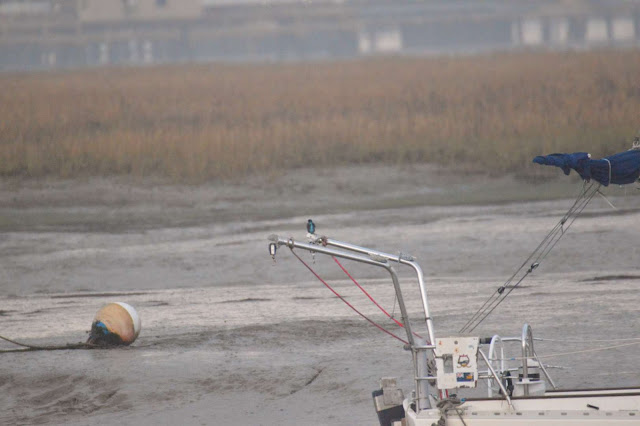
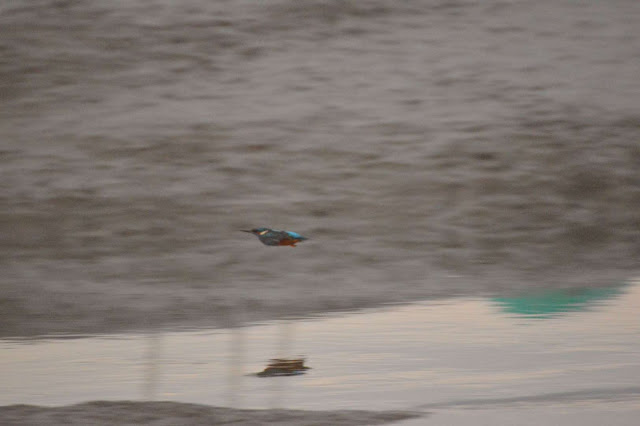
As I reached Ashlett Creek I heard the unmistakable 'peep' of a Kingfisher. I located it fishing off the moored boats. It was quite dark so the photos are a little grainy.
The mill used to be a social and snooker club but has now closed.
New Years Day plus one.New Years day was a bit of a wash out so I had to wait 24 hours to get out again.
I popped down for a couple of hours at Titchfield Haven once more. There was little wind and all was calm and bright for the second day of 2017.
The Snow Bunting was still around and who can blame it in such glorious weather?
Sanderling were roosting at high tide and were proving irresistible to photograph.
A quick pit stop into the reserve itself was rewarded with some stunning golden light through the reed beds.
The sun had set at the beginning of the year. Lets hope the omens are with us....
N.B The title of this post is an excerpt from 'Brand New Start' by Paul Weller